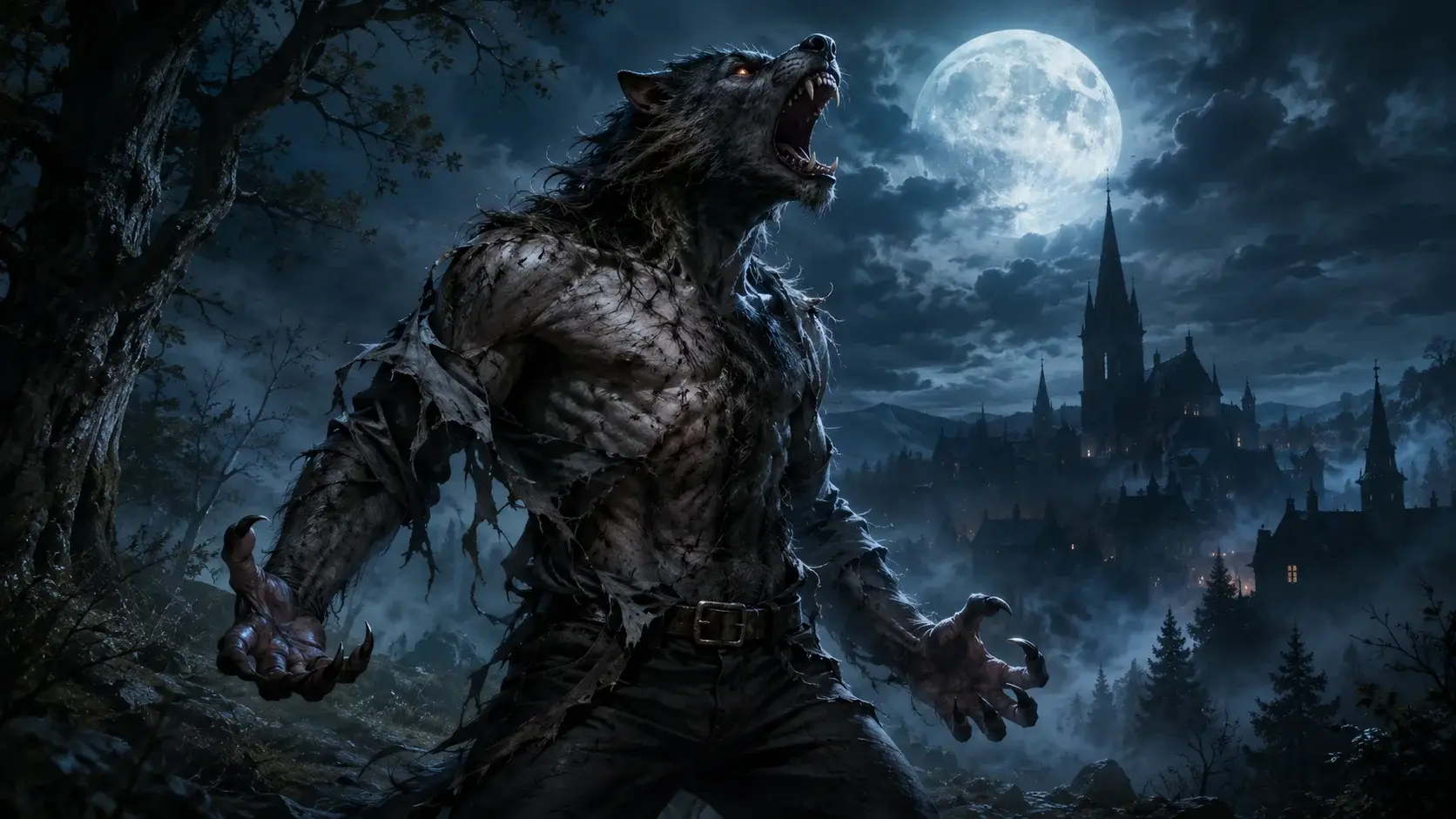
Every culture that ever feared the dark tells a version of the same story, and it always opens the same way: a man you know — a neighbour, a husband, a quiet farmer — walks into the trees as the moon swells full, and something that is no longer entirely a man comes back out.
The werewolf is the oldest nightmare our species keeps about itself. It is not a horror that descends on the village from somewhere far away. It is the village — a familiar face by daylight that sheds its skin by night. And underneath three thousand years of the legend lies a single question that no torch and no silver bullet has ever truly answered: how do you guard against a monster when the monster might be you?
The Beast Beneath the Skin
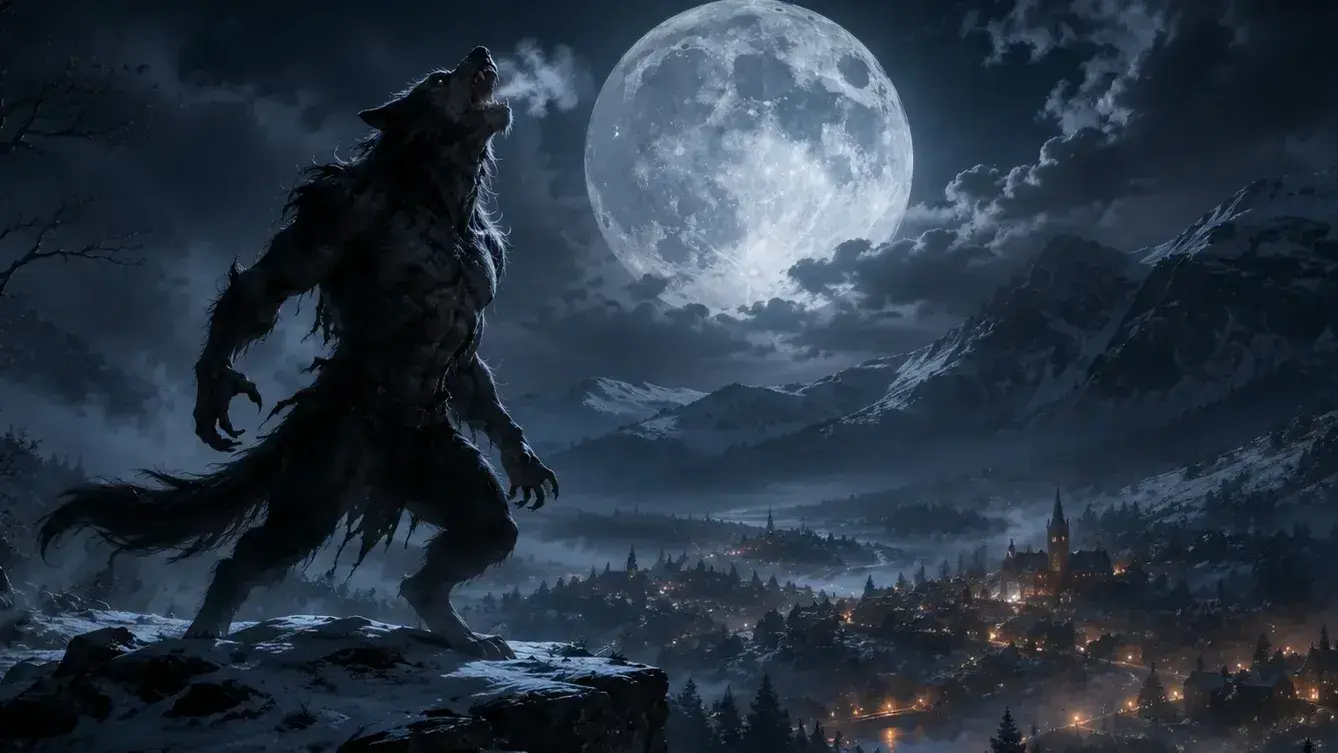
A werewolf — from the Old English wer (man) and wulf (wolf) — is a human being who transforms, willingly or in agony, into a wolf or a towering wolf-man. The transformation is the whole of the terror. Vampires keep their faces; ghosts keep their grief. The werewolf loses the one thing that made it human: its self. What hunts in the night is not a person making evil choices but a person erased, the reasoning mind drowned beneath instinct, hunger, and the smell of blood.
The Greeks called the affliction lycanthropy, after the Arcadian king Lycaon, whom Zeus turned into a wolf for serving the gods human flesh — already, at the very root of the myth, the wolf is a punishment for a crime against humanity itself.
The Many Roads to the Wolf
Folklore is unusually specific about how a person crosses over, and the variety is half the dread — because almost any of them could happen to you:
The bite. The modern favourite: survive a werewolf's attack and the curse enters the blood. (This rule is largely a gift of 20th-century cinema, not old folklore.)
The pelt or the belt. Across medieval Germany and Scandinavia, a man became a wolf by donning an enchanted wolf-skin or buckling a wolf-hide belt — strap it on, and the beast strapped itself to you.
The pact. Sorcerers and witches were said to take wolf-shape through a bargain with the Devil, smearing themselves with a salve and running the night roads as beasts.
The curse. A saint's wrath, a parent's dying words, being born on Christmas, or being the seventh son of a seventh son — fate alone could mark a child for the wolf.
The water in the paw-print. In Balkan and Slavic tales, simply drinking rain that had pooled in a wolf's footprint was enough to begin the change.
The Centuries of Blood
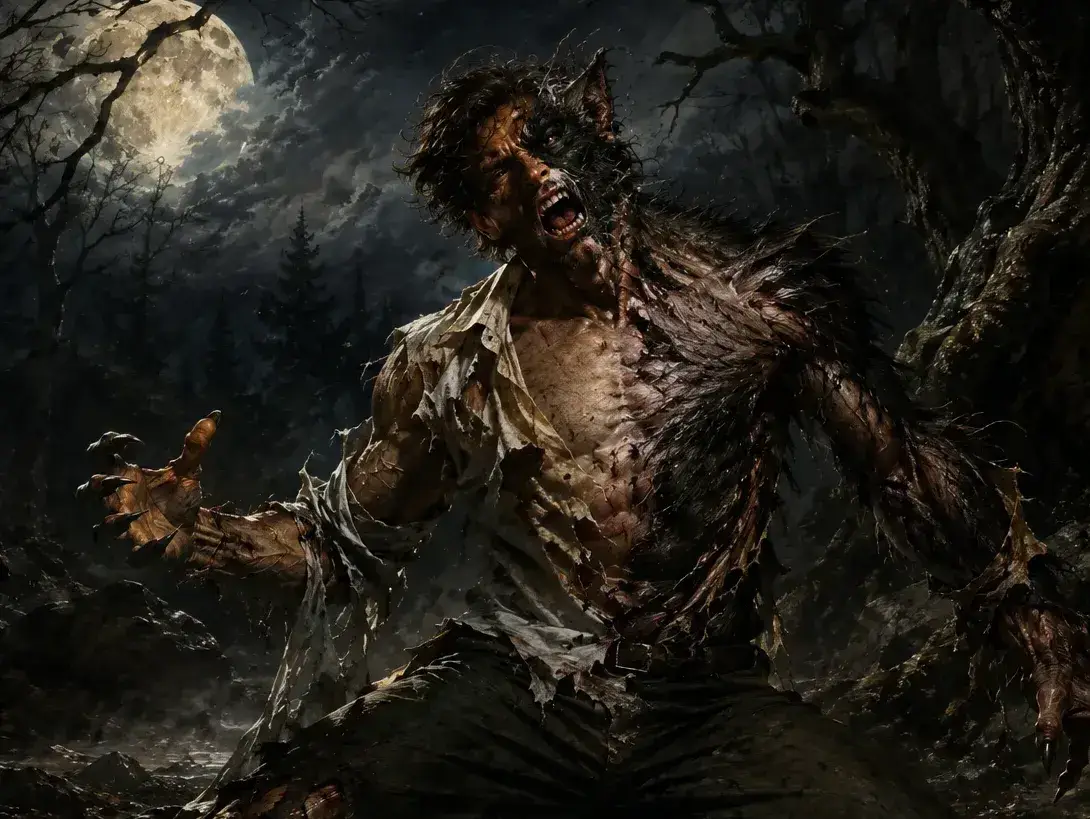
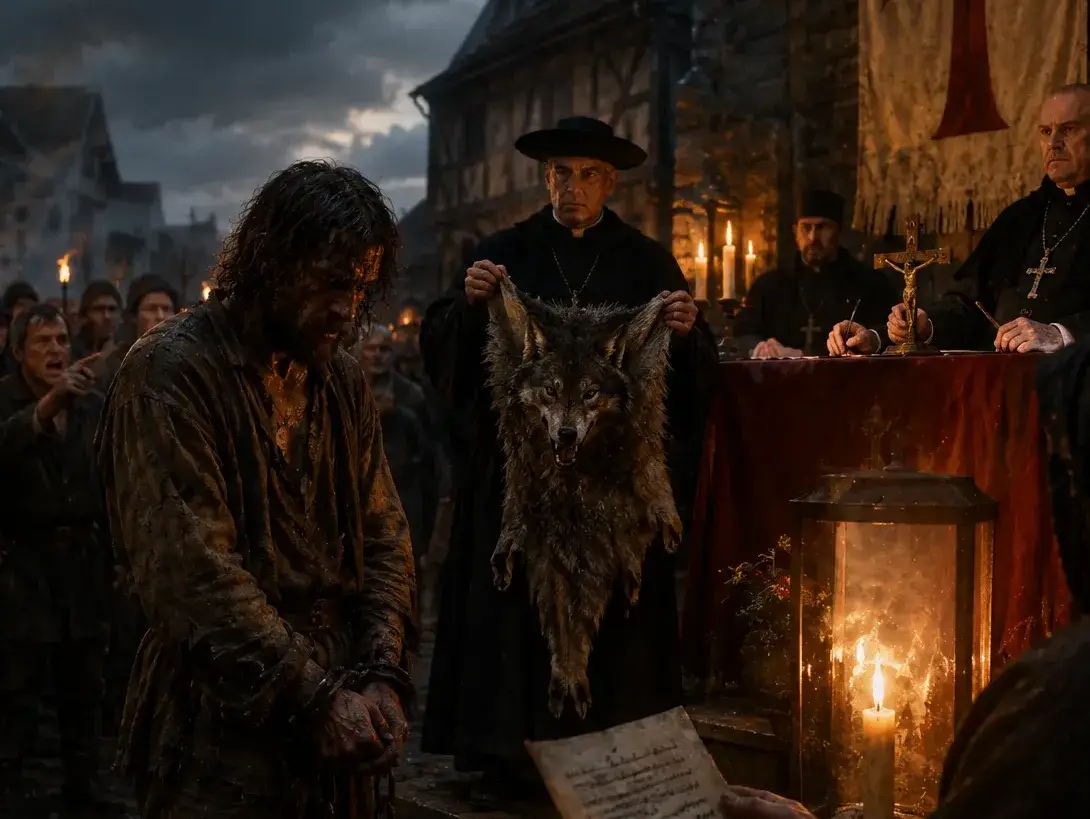
Here the legend turns from story into something far colder — because for two centuries, Europe tried and executed real people as werewolves. The same fever that fed the witch trials gave us the wolf trials, and the records still make the skin crawl.
In 1573 the French hermit Gilles Garnier, the “Werewolf of Dole,” was burned for killing children in the fields, confessing under torture that an ointment let him take wolf-form. In 1589, in Bedburg near Cologne, Peter Stubbe was broken on the wheel after a confession of monstrous crimes committed, he said, while wearing a magical wolf-belt given by the Devil. There was Jean Grenier, a disturbed teenage shepherd; the Gandillon family of the Jura; and thousands more across France and Germany who died for a transformation that, we now believe, lived only in fear, ergot-poisoned grain, mental illness, and the screams of the tortured.
The werewolf trials are the legend's darkest truth: long before it frightened us at the cinema, it was an excuse to burn the strange, the sick, and the unlucky.
Silver, Wolfsbane, and the Ways to End It
Everyone “knows” you kill a werewolf with a silver bullet — yet that, too, is mostly a creation of film. Older folklore offered humbler defences. Wolfsbane (aconite) was the true botanical ward, planted at thresholds and hung in doorways. A wound that drew blood was thought to break the spell and reveal the human beneath. Calling the afflicted by their Christian name could snap them back to themselves. Iron, exhaustion, the cock's crow at dawn, and the simple turning of the moon all returned the wolf to the man — until the next full moon dragged him out again.
Brothers Across the World
The wolf-man is not one creature but a hundred wearing the same hunger, and the older they are the more they bleed into one another:
In France he is the loup-garou; in Portugal and Galicia the lobisomem; carried across the ocean he becomes the lobizón of Argentina and Brazil, fate of the cursed seventh son.
Among the Slavs the vlkodlak / vukodlak blurs unsettlingly into the vampire — in much of Eastern Europe the same word served both, and a dead werewolf was feared to rise as a blood-drinker.
The Greek vrykolakas, the snarling pricolici of Romania, and the Norse úlfheðnar — “wolf-coats,” warriors who fought in a wolf-skinned battle-fury kin to the berserker.
And the cousins that are not the same, however the films confuse them: the Navajo skinwalker and the Algonquian wendigo are their own distinct horrors, born of different soil — proof that humanity reaches for the wolf-man independently, again and again.
Why the Wolf?
Of all the animals, why has the wolf carried this weight for so long? Because for most of human history the wolf was the predator at the exact edge of the firelight — the wild watching the warmth, the thing our herds and our children were lost to in the dark. To imagine a man becoming that was to give shape to the fear we carry about ourselves: that civilisation is only a skin; that beneath the manners and the morning prayers there is an animal that remembers how to hunt, and that the right moonlight could call it out.
The werewolf endures because it is never really about wolves. It is about the beast we are afraid we already are.
So when the moon comes full and the dogs in the village will not stop barking — look around the fire at the faces you trust most. The old stories swear that one of them already knows which way the change is coming.