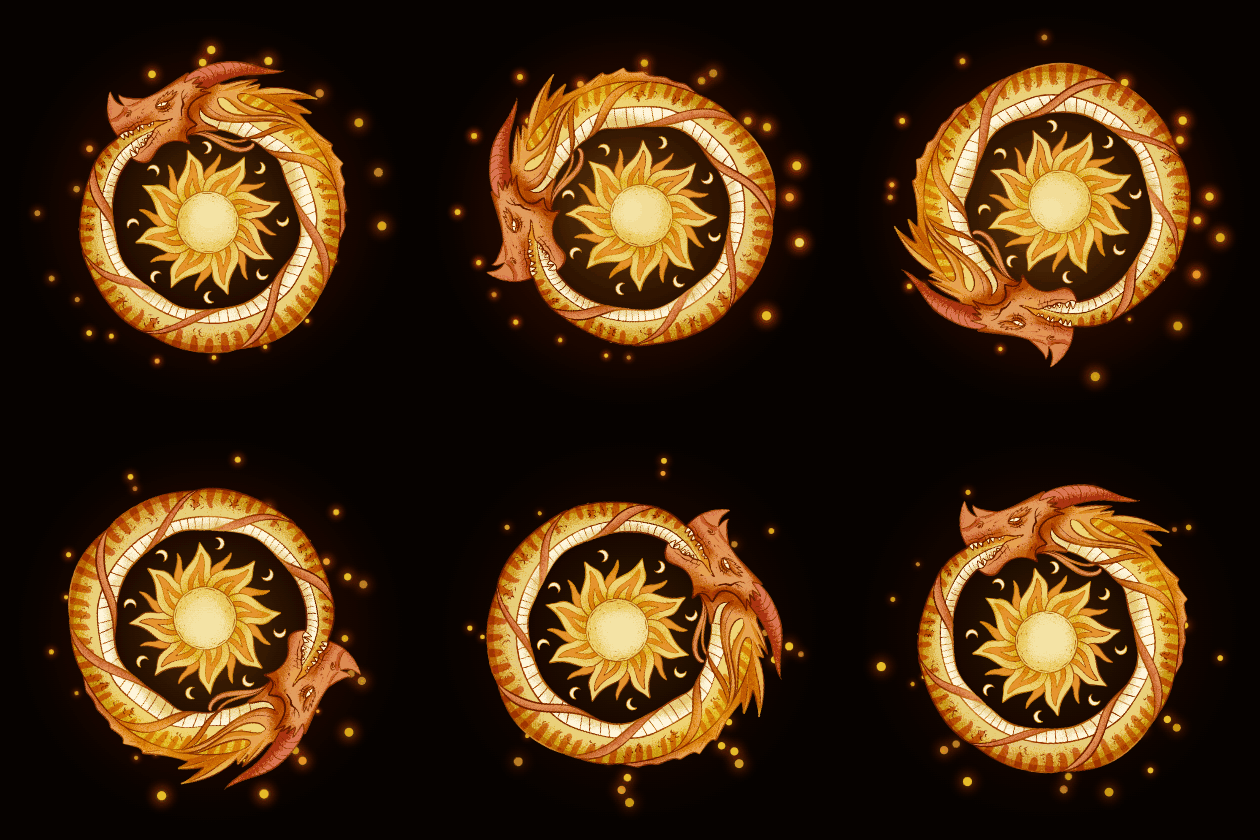
The Phoenix is the immortal fire-bird of classical and medieval European legend: a magnificent, gloriously plumaged bird that lives for centuries, then builds a nest of fragrant spices, is consumed in flames, and rises reborn from its own ashes — the supreme symbol of death and resurrection, renewal, and immortality, embraced by Christianity as an emblem of the risen Christ. It is the fire-bird, the eternal symbol of rebirth.
The Bird of the Sun
The Phoenix (Greek phoinix) is among the most beautiful and enduring of all legendary creatures, known to the ancient Egyptians (as the Bennu, the heron of the sun and rebirth) and described by the Greek and Roman authors — Herodotus, Ovid, Pliny, and others. It was imagined as a great and resplendent bird, often eagle-sized or larger, with magnificent plumage of red, gold, and purple, gleaming like fire and the sun, with a radiant crest and a melodious song. It was a bird of the sun, associated with Heliopolis (the “City of the Sun”) in Egypt, where it was said to return at the end of its long life.
The Death and Rebirth
The phoenix’s defining miracle is its cycle of fiery death and resurrection. There is only ever one phoenix at a time, and it lives an immense span — five hundred years, or a thousand, or more. When at last it feels its end approaching, it builds a nest (or pyre) of the most fragrant woods and spices — myrrh, frankincense, cinnamon, cassia — and there, fanning the flames (or kindled by the sun), it is consumed in fire and burned to ashes. And from the ashes — from a worm or an egg formed within them, in some tellings — a new phoenix arises, young and whole, reborn from its own destruction. The young phoenix then gathers the ashes of its parent into an egg of myrrh and carries it to Heliopolis, to the altar of the sun, completing the cycle.
The Symbol of Immortality
The phoenix is, above all, a symbol — the supreme emblem of resurrection, immortality, renewal, and the triumph of life over death, of the eternal rising again from destruction. The early Christians embraced it eagerly as a figure of the resurrection of Christ and the promise of eternal life, and it appears throughout Christian art and the bestiaries in this sense. Beyond Christianity it became a universal symbol of rebirth, recovery, and the indestructible — of cities and persons and hopes that rise again from their ruin and ashes (“rising like a phoenix”). Its imagery echoes across cultures (the Chinese Fenghuang, the Egyptian Bennu, the Slavic Firebird). In the Phoenix, the European imagination gave form to the fire-bird — the glorious immortal bird that burns to ashes and rises reborn, the eternal symbol of resurrection, renewal, and the victory of life over death.