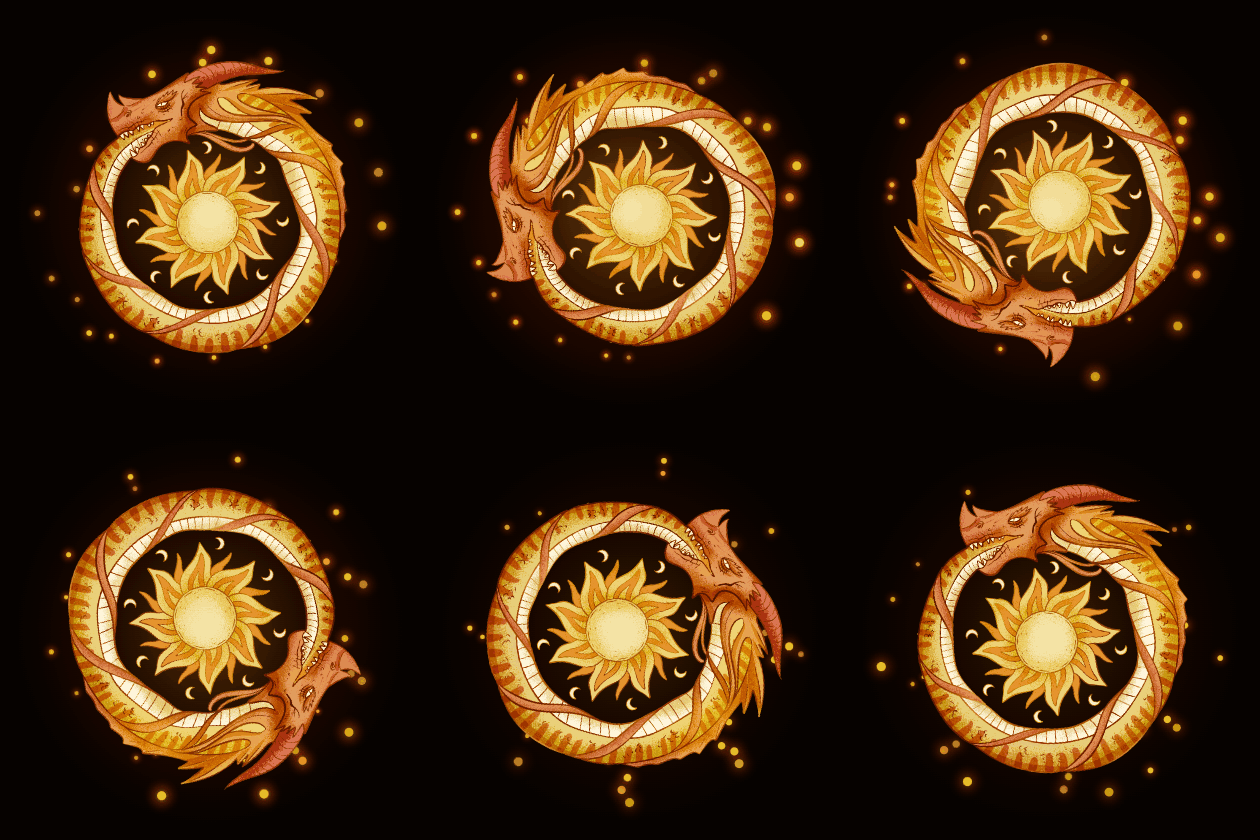
Nidhogg was the great dragon-serpent that gnaws at the roots of the world-tree Yggdrasil — the malevolent corpse-eating beast of the Norse underworld who chews ceaselessly at the foundations of the cosmos and feasts upon the bodies of the dishonoured dead. He is the constant gnawing decay at the root of the world, the corruption that works always to bring the great tree, and all it holds, down.
The Gnawer of the Roots
Nidhogg (Old Norse Níðhöggr, “malice-striker” or “he who strikes with hatred”) was a monstrous dragon or serpent that dwelt at the lowest depths of the cosmos, in the spring Hvergelmir in the cold realm of Niflheim, beneath one of the three great roots of the world-tree Yggdrasil. There, Nidhogg gnaws unceasingly at the root of the tree that holds up all the worlds — chewing, always chewing, working to undermine the very structure of the cosmos. He is the principle of decay and corruption at the foundation of everything, the destruction that gnaws away at the root of the world even as the tree strives to live.
The Feud Up the Tree
Nidhogg was locked in an eternal exchange of insults with the eagle that sits in the topmost branches of Yggdrasil. Between them, running up and down the great trunk, scurried the squirrel Ratatoskr, who carried slanderous messages back and forth — bearing the eagle's insults down to Nidhogg and Nidhogg's threats up to the eagle, stirring the feud between the dragon at the root and the bird at the crown. This strange detail gives the cosmic tree a living, quarrelsome inner life: the malice-striker below, the eagle above, and the gossiping squirrel forever carrying spite between them.
The Devourer of the Dead
Beyond gnawing the tree, Nidhogg had another grim office: he fed upon the bodies of the dead. In the Norse vision of the afterlife, the dishonoured dead — oath-breakers, murderers and the wicked — came to a grim shore in the underworld, and there Nidhogg sucked the blood from their corpses and tore at their bodies, a fate of horror reserved for those who had lived without honour. He was thus a beast of punishment as well as decay, the dragon who consumed the worst of the dead in the cold depths below the world.
The Survivor of the End
Nidhogg has a strange and ominous role at the very end of the Norse story. In the great prophecy of Ragnarök and the world's renewal, after the old world has burned and drowned and a new green world has risen, the seeress's vision ends with a final, unsettling image: Nidhogg flying up from below, bearing corpses in his wings, over the new world. The meaning is debated — perhaps a last shadow of the old darkness lingering even into the reborn world, perhaps the inescapable persistence of death and decay. Nidhogg endures as the Norse dragon of corruption and the gnawing of the world — the malice-striker at the root of all things, the devourer of the wicked dead, the decay that works forever against the life of the cosmos, and the dark shape that survives even the ending of the world.
At the root of the world-tree, in the cold depths, a dragon gnaws forever at the foundation of all things and feasts on the dishonoured dead — the decay that even the world's rebirth cannot quite be rid of.