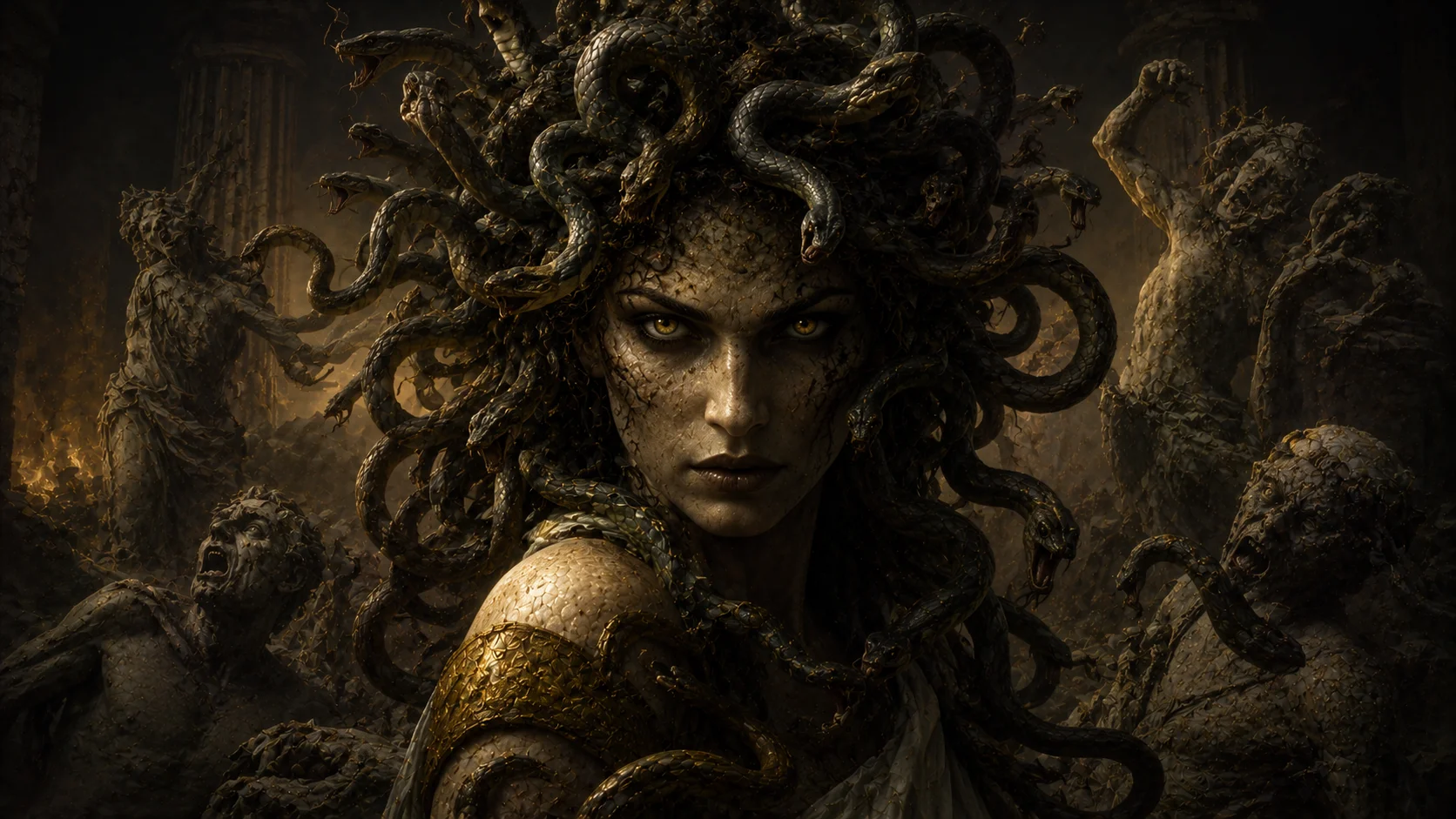
Medusa is the monster whose face you must never look upon — the snake-haired Gorgon whose gaze turned the living to stone. But she is also one of myth's most tragic figures, a victim before she was a monster, and her story has become, in modern times, a symbol of injustice as much as of horror.
The Gorgon
Medusa was one of three Gorgon sisters, but unlike the immortal Stheno and Euryale, she alone was mortal. In the most famous version, she was once a beautiful maiden — a priestess of Athena — whose hair was her glory. After she was violated by Poseidon in Athena's own temple, the goddess, unable or unwilling to punish a fellow Olympian, turned her wrath on the victim: Medusa's hair became a nest of writhing serpents, and her gaze was cursed to turn any who met it to stone. Beauty transformed into a weapon of horror.
The Hero and the Mirror
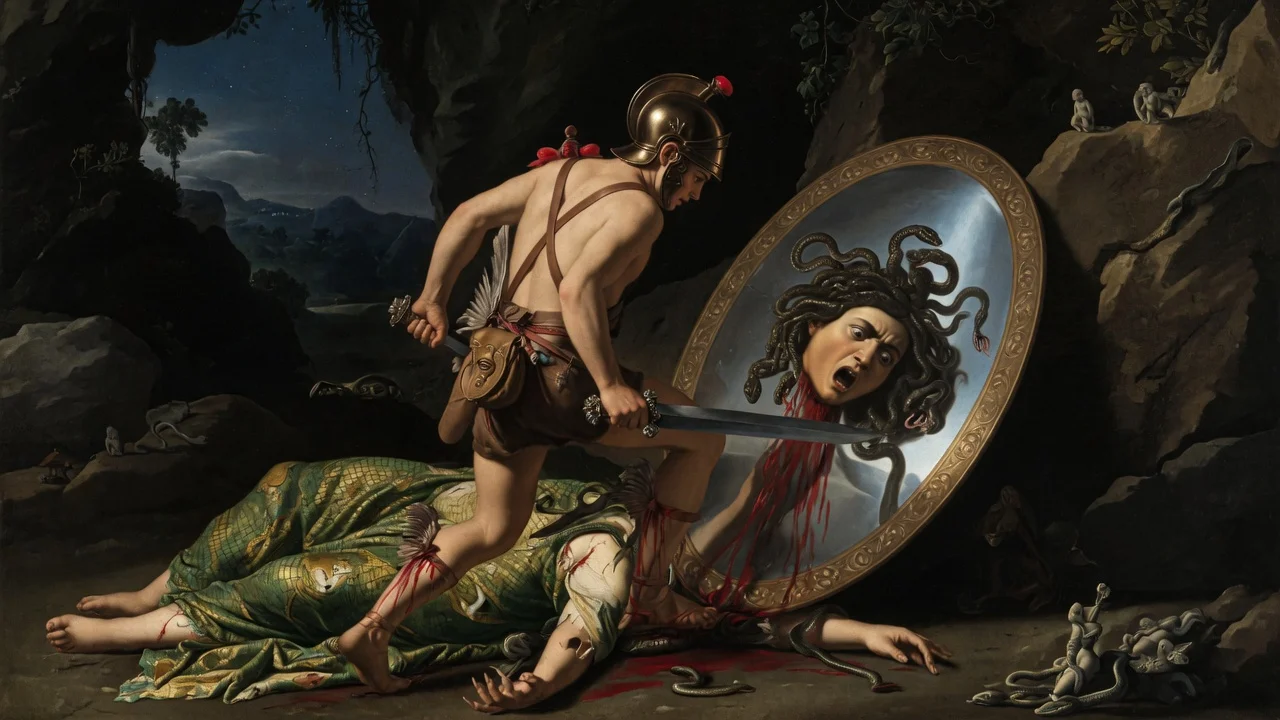
The hero Perseus was sent to bring back her head — a task meant to kill him. But with gifts from the gods — winged sandals, a cap of invisibility, an adamantine sickle, and a polished bronze shield from Athena — he succeeded. The key was the shield: rather than look at Medusa directly, Perseus watched her reflection in the mirror-bright bronze, and so beheaded her without meeting her petrifying eyes. From her severed neck sprang the winged horse Pegasus and the giant Chrysaor, the children she had conceived by Poseidon.
The Head That Kept Its Power
Even in death Medusa's gaze remained deadly. Perseus used her severed head as a weapon — turning the sea-monster Cetus and the tyrant Polydectes to stone — before giving it to Athena, who set it upon her shield, the Gorgoneion, as a ward against all evil. The face too terrible to look at became the ultimate protection.
Once a warning against monstrous women, Medusa is now as often read as the woman punished for a crime done to her — the victim the world chose to call a monster.