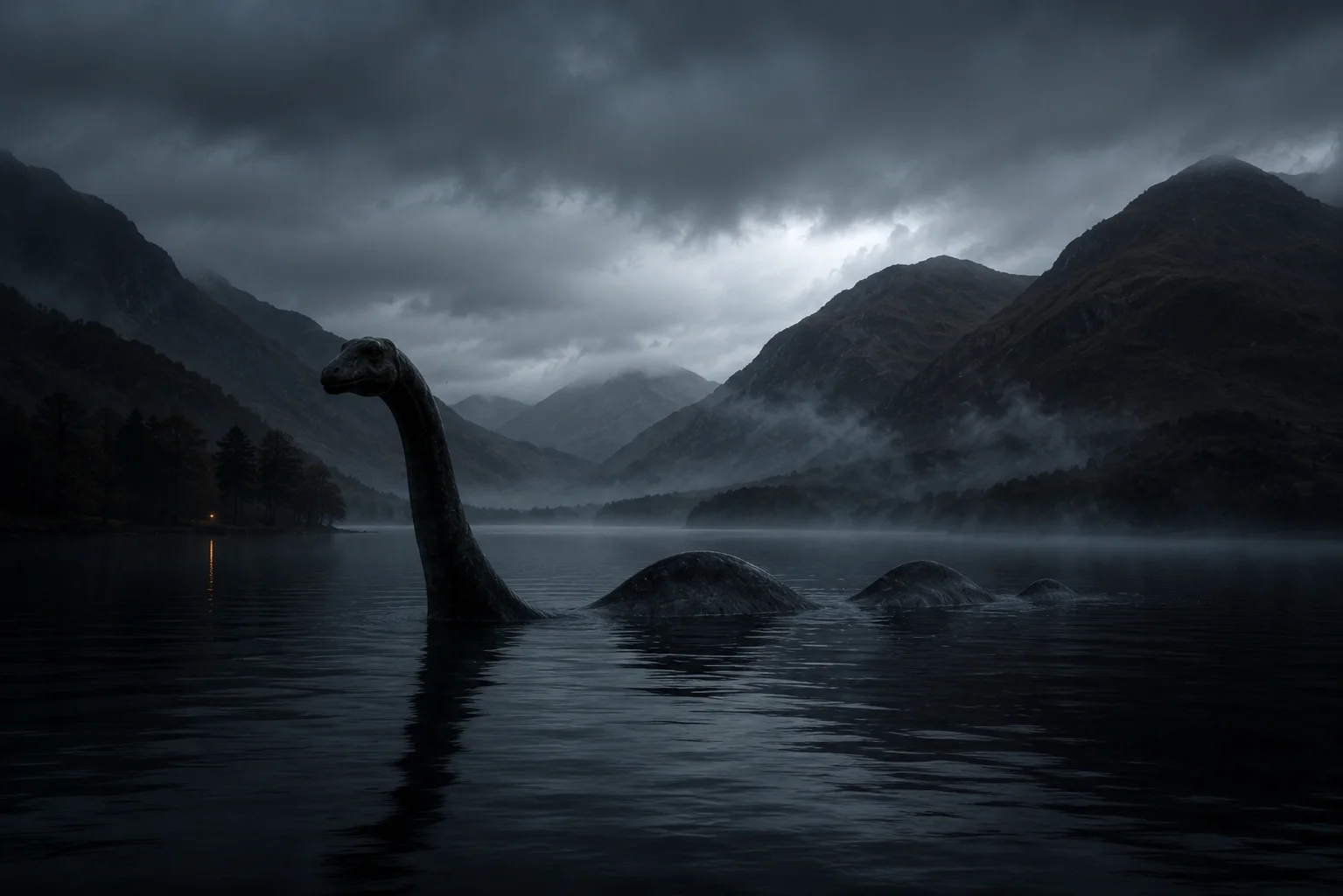
The Loch Ness Monster, affectionately known as Nessie, is the most famous lake monster in the world — a large, mysterious creature said to inhabit the deep, dark waters of Loch Ness, a great freshwater lake in the Scottish Highlands, often described as a long-necked, humped, plesiosaur-like aquatic beast. The great lake monster of Scotland, the elusive creature of the deep Highland loch, Nessie is the most famous lake cryptid in the world, the subject of countless sightings, famous photographs, expeditions, and an enduring global fascination, the mysterious monster of the deep dark loch.
The Monster of the Loch
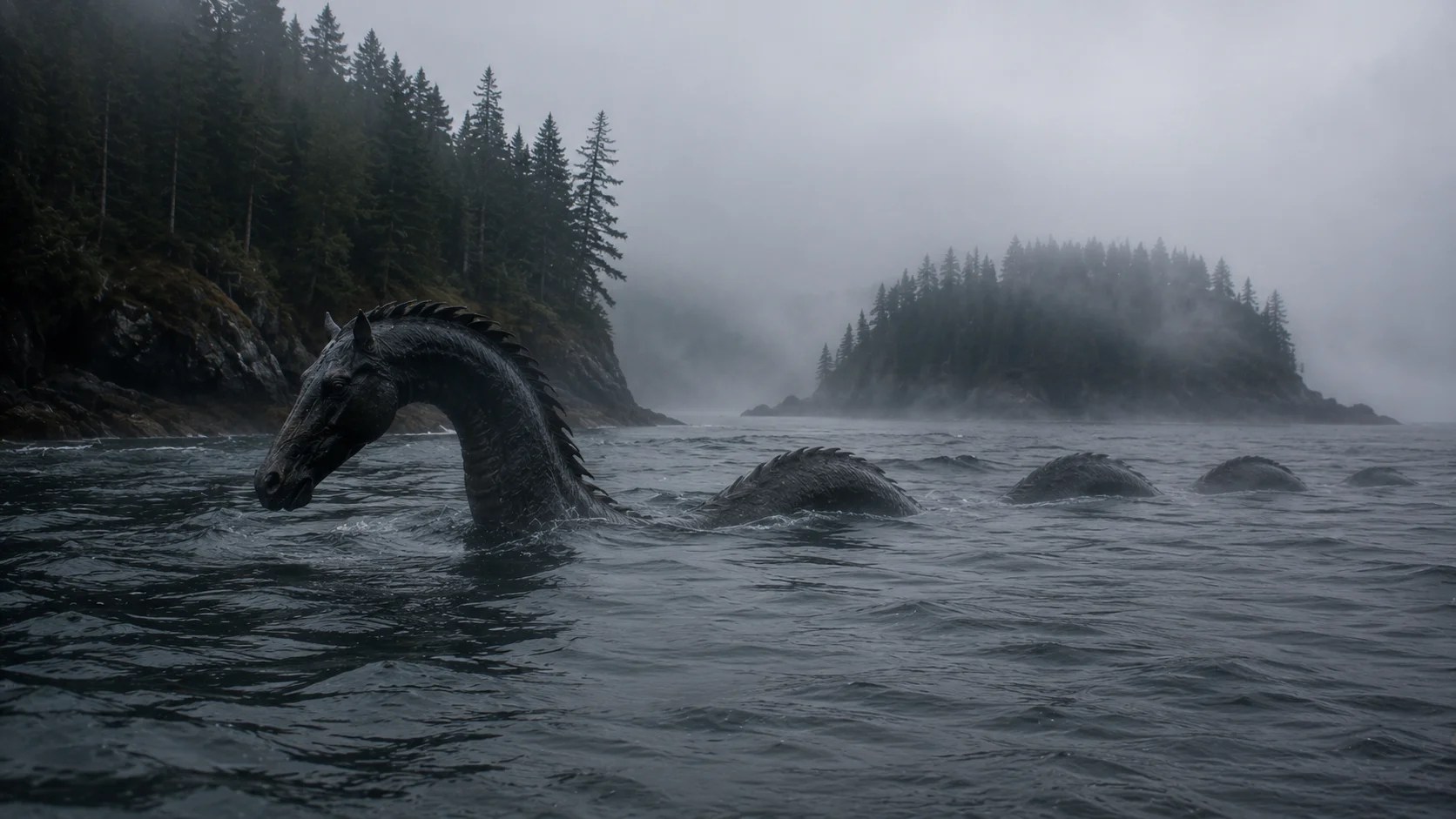
The Loch Ness Monster is described as a large aquatic creature inhabiting the deep waters of Loch Ness — a long, deep, dark freshwater lake in the Scottish Highlands, one of the largest and deepest bodies of fresh water in the British Isles, its peat-darkened waters deep and murky and difficult to see into. Nessie is most often described as a large creature with a long neck, a bulky body, one or more humps breaking the surface of the water, and sometimes flippers and a small head — a description strongly resembling a plesiosaur, the long-necked aquatic reptile of the age of the dinosaurs (and the popular conception of Nessie as a surviving plesiosaur, a relic of the dinosaur age dwelling in the loch, is the most famous, if scientifically untenable, image of the creature). It is said to be elusive and rarely seen, surfacing only briefly before submerging into the deep dark waters, leaving only glimpses, wakes, humps, and the occasional long neck breaking the surface. As the monster of the loch, the large, long-necked, humped, plesiosaur-like creature of the deep Highland lake, Nessie is the elusive, mysterious aquatic beast of Loch Ness, glimpsed but never captured, dwelling in the dark deep waters of the loch.
The Sightings and the Famous Photograph
The Loch Ness Monster became a global sensation in the 1930s, when a wave of reported sightings — sparked by a sighting reported by a couple who saw a great creature crossing the road near the loch in 1933, and a flurry of sightings, reports, and media attention that followed — brought Nessie to worldwide fame. The most famous piece of Nessie evidence is the “Surgeon’s Photograph” of 1934 — the famous black-and-white photograph, attributed to a respected surgeon, that appears to show a long-necked creature with a small head rising from the waters of the loch, the iconic image of the long-necked Loch Ness Monster, reproduced and famous around the world. (The Surgeon’s Photograph was, decades later, revealed to be a hoax — a model of a sea-monster head and neck attached to a toy submarine, photographed on the loch — though it remains the most iconic image of Nessie.) The sightings — the countless reported glimpses of humps, necks, wakes, and creatures in the loch — the photographs, the films, and the sonar readings, have been the subject of intense interest, investigation, and debate, the believers holding them as evidence of a real creature and the skeptics dismissing them as hoaxes, misidentifications (of waves, logs, otters, birds, boat-wakes, and other natural phenomena), and wishful thinking. As the subject of countless sightings and the famous (if hoaxed) Surgeon’s Photograph, Nessie is the great lake cryptid of evidence, debate, and enduring fascination.
The Search for Nessie
Loch Ness has been the site of numerous searches, expeditions, and investigations in the quest to find or prove (or disprove) the existence of the monster — the expeditions, sonar surveys, underwater searches, camera traps, and, in recent times, environmental DNA surveys of the loch’s waters, all seeking evidence of the creature. These investigations have failed to produce conclusive evidence of a large unknown creature in the loch — the sonar surveys finding no monster, the DNA survey finding (among the loch’s ordinary life) no trace of a plesiosaur or large reptile but a great deal of eel DNA (leading to the suggestion that Nessie sightings might be explained, in part, by large eels) — and mainstream science regards the Loch Ness Monster as a creature of folklore, hoax, and misidentification rather than a real, undiscovered animal. But the searches continue, the sightings are still reported, and the fascination endures. As the subject of the enduring search for Nessie, the great quest to find or prove the monster of the loch, the Loch Ness Monster remains the most famous and most sought lake cryptid in the world, the elusive creature of the deep dark loch that has never been found but has never been forgotten.
The Great Lake Monster
The Loch Ness Monster is the most famous of the world’s many lake monsters — the large, mysterious creatures said to inhabit deep lakes around the world, including Champ (of Lake Champlain in North America), Ogopogo (of Okanagan Lake in Canada), and the many other lake monsters of the world’s deep lakes, the global phenomenon of the monster of the deep lake. Nessie is also bound up with the deep folklore of Scotland and the Highlands, with their traditions of water-horses, kelpies, and water-monsters of the lochs (the Highland lochs, deep, dark, and mysterious, long being the home, in Scottish folklore, of water-horses, kelpies, and monstrous water-beings), and the Loch Ness Monster draws, in part, on this deep tradition of the monsters of the Highland lochs. As the most famous lake monster in the world — the great cryptid of Loch Ness, the elusive creature of the deep Highland loch, drawing on the deep folklore of the Scottish water-monsters and standing at the head of the world’s many lake monsters — Nessie is the iconic lake cryptid of the modern age, the mysterious monster of the deep dark loch, the most famous and beloved of all the creatures of cryptozoology.
Legacy
The Loch Ness Monster endures as the most famous lake monster in the world and one of the most famous cryptids of any kind, the elusive, long-necked, humped creature of the deep dark waters of Loch Ness, the subject of countless sightings, the famous Surgeon’s Photograph, numerous searches and expeditions, and an enduring global fascination, the great lake cryptid of the modern age. As the lake monster of Scotland — Nessie, the large, long-necked, plesiosaur-like creature of the deep Highland loch, the most famous lake monster in the world, drawing on the deep folklore of the Scottish water-monsters — the Loch Ness Monster stands as the iconic lake cryptid of cryptozoology and the popular imagination, the elusive, mysterious, beloved monster of the deep dark loch, never found but never forgotten, the great mystery of the waters of Loch Ness.