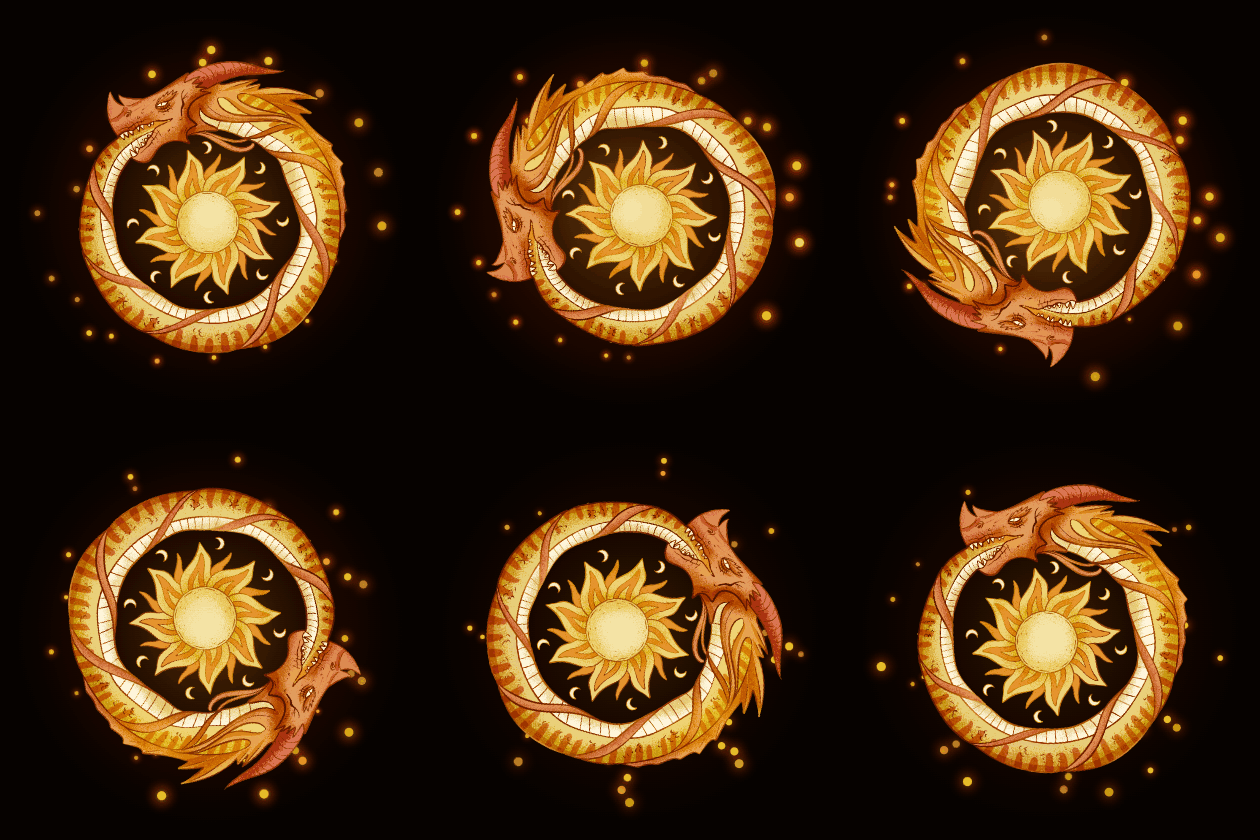
Jörmungandr was the world-serpent of Norse myth — the colossal sea-serpent, child of Loki, who grew so vast that he encircles the entire world beneath the ocean, biting his own tail, and who is the great fated enemy of Thor, destined to slay and be slain by the thunder-god at Ragnarök. He is the serpent that holds the world in its coils, the boundary of the sea and the doom of Thor.
The Serpent That Circles the World
Jörmungandr (Old Norse Jörmungandr, “huge monster”), also called the Midgard Serpent (Miðgarðsormr), was one of the three monstrous children of Loki by the giantess Angrboda — brother to the wolf Fenrir and to Hel. When the gods learned of the doom these children were fated to bring, Odin cast Jörmungandr into the great ocean that surrounds the world of men (Midgard). There, in the deep, the serpent grew — and grew, and grew — until he had become so enormous that he encircled the entire world, and could grasp his own tail in his jaws. So he lies, a vast ring of serpent beneath the sea, his body the very boundary of the world, and it is said that when he releases his tail, the world will end.
The Fishing of Thor
The enmity between Jörmungandr and Thor is one of the great rivalries of Norse myth, and they met more than once before their final battle. The most famous encounter came when Thor went fishing from the boat of the giant Hymir, using the head of an ox as bait. The serpent took the bait, and Thor hauled with all his divine might, bracing his feet through the bottom of the boat, until he drew Jörmungandr's venomous head up out of the sea and the two ancient enemies glared at one another face to face. Thor raised Mjölnir to deal the killing blow — but the terrified Hymir cut the fishing line, and the serpent sank back into the depths, their reckoning postponed.
The Doom at Ragnarok
That reckoning comes at last at Ragnarök. As the world ends, Jörmungandr releases his tail and rises from the sea, writhing onto the land and spewing his deadly venom into the air and water, poisoning the sky. There, on the final battlefield, he meets Thor for the last time. The two destroy each other: Thor slays the great serpent with his hammer Mjölnir — but the serpent's venom is upon him, and the thunder-god is able to stagger only nine steps away before he falls dead, killed by the poison of his ancient enemy. So the world-serpent and the thunder-god, fated foes since the beginning, die together at the end.
The Boundary of the World
Jörmungandr endures as one of the most awesome images in all of myth — the serpent so vast it encircles the entire world, biting its own tail, the living boundary of the sea, the fated nemesis of Thor. He is a Norse version of the world-encircling serpent (the ouroboros) found across many cultures, and he embodies the Norse vision of a cosmos held in tension by vast opposing forces — the serpent whose coils define the world, whose venom poisons the sky, and whose release means the end of all things.
So vast he circles the whole world and bites his own tail beneath the sea — and when he finally lets go, he and the thunder-god will kill each other, and Thor will walk nine steps before he falls.