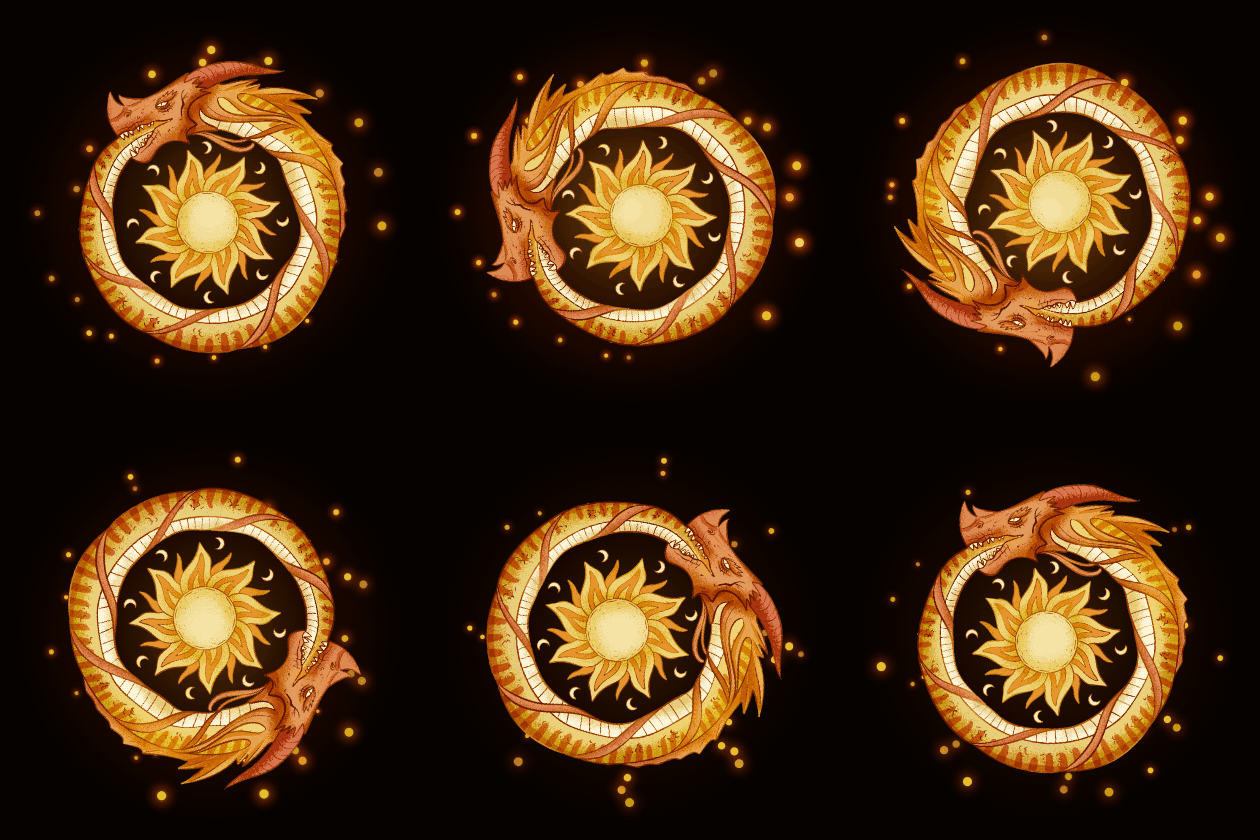
Hiranyakashipu is a great demon-king of Hindu myth — the tyrant asura who, made nearly invincible by a cunningly-worded boon, conquered the cosmos and demanded to be worshipped as god, persecuting his own devout son Prahlada, until he was destroyed by Vishnu's man-lion avatar Narasimha through the loophole in his boon. The tyrant of the unbreakable boon, Hiranyakashipu is the proud demon-king whose seemingly perfect invincibility was undone by the man-lion.
The Demon-King of the Boon
Hiranyakashipu (Sanskrit Hiraṇyakaśipu, “clothed in gold”) is a great asura (demon) king, the brother of the demon Hiranyaksha (whom Varaha had slain). To gain power and to take revenge for his brother, Hiranyakashipu performed tremendous austerities and won from Brahma a boon of extraordinary, cunningly-worded near-invincibility: he could not be killed by man or beast, nor by any weapon, nor by day or by night, nor inside or outside, nor on the ground or in the sky. Believing this boon made him utterly immortal and invincible, Hiranyakashipu became a tyrant of overwhelming pride.
The Tyrant Who Demanded Worship
With his boon, Hiranyakashipu conquered the three worlds, defeated and oppressed the gods, terrorised the cosmos, and in his supreme arrogance demanded that all beings worship him as god, forbidding the worship of Vishnu (his enemy, whose avatar had slain his brother) or any other deity. He set himself up as the supreme object of worship, the demon-king who would be god. But his tyranny met an unexpected resistance in his own household.
The Devotion of Prahlada
Hiranyakashipu's own son, Prahlada, was — against all his father's commands — a pure and steadfast devotee of Vishnu. The boy refused to worship his father as god, declaring that Vishnu was the supreme lord, present everywhere. Enraged by his son's devotion to his enemy, the tyrant tortured and tried to kill his own son again and again — by poison, by trampling elephants, by serpents, by throwing him from heights, by fire — but each time, Vishnu protected the devoted Prahlada, and the boy survived unharmed, his faith unshaken. At last, mocking his son's claim that Vishnu was everywhere, Hiranyakashipu demanded: “Is your Vishnu in this pillar?” and struck a great pillar of his hall — and from it burst forth Narasimha.
The Doom by the Loophole
From the shattered pillar emerged Narasimha — Vishnu's man-lion avatar, the perfect being to destroy the demon through the loophole in his unbreakable boon. The demon could not be killed by man or beast — Narasimha was both and neither (a man-lion). Not by any weapon — Narasimha used his claws. Not by day or night — it was twilight. Not inside or outside — on the threshold. Not on ground or in sky — on Narasimha's lap. And so, satisfying every condition through the loophole, Narasimha tore the tyrant Hiranyakashipu apart with his claws, destroying the seemingly invincible demon and saving his devotee Prahlada. Hiranyakashipu endures as the great demon-king whose cunningly-worded, seemingly perfect invincibility was undone by the cleverness of the divine and the devotion of his own son — the tyrant who would be god, brought down by the man-lion in the impossible space between all his defences, proving that no evil, however invincible it seems, is beyond the reach of the divine.
The proud demon-king whose cunning boon made him unkillable by man or beast, by day or night, inside or out — undone, in the impossible space between all his defences, by the man-lion Narasimha, to save his devout son Prahlada.