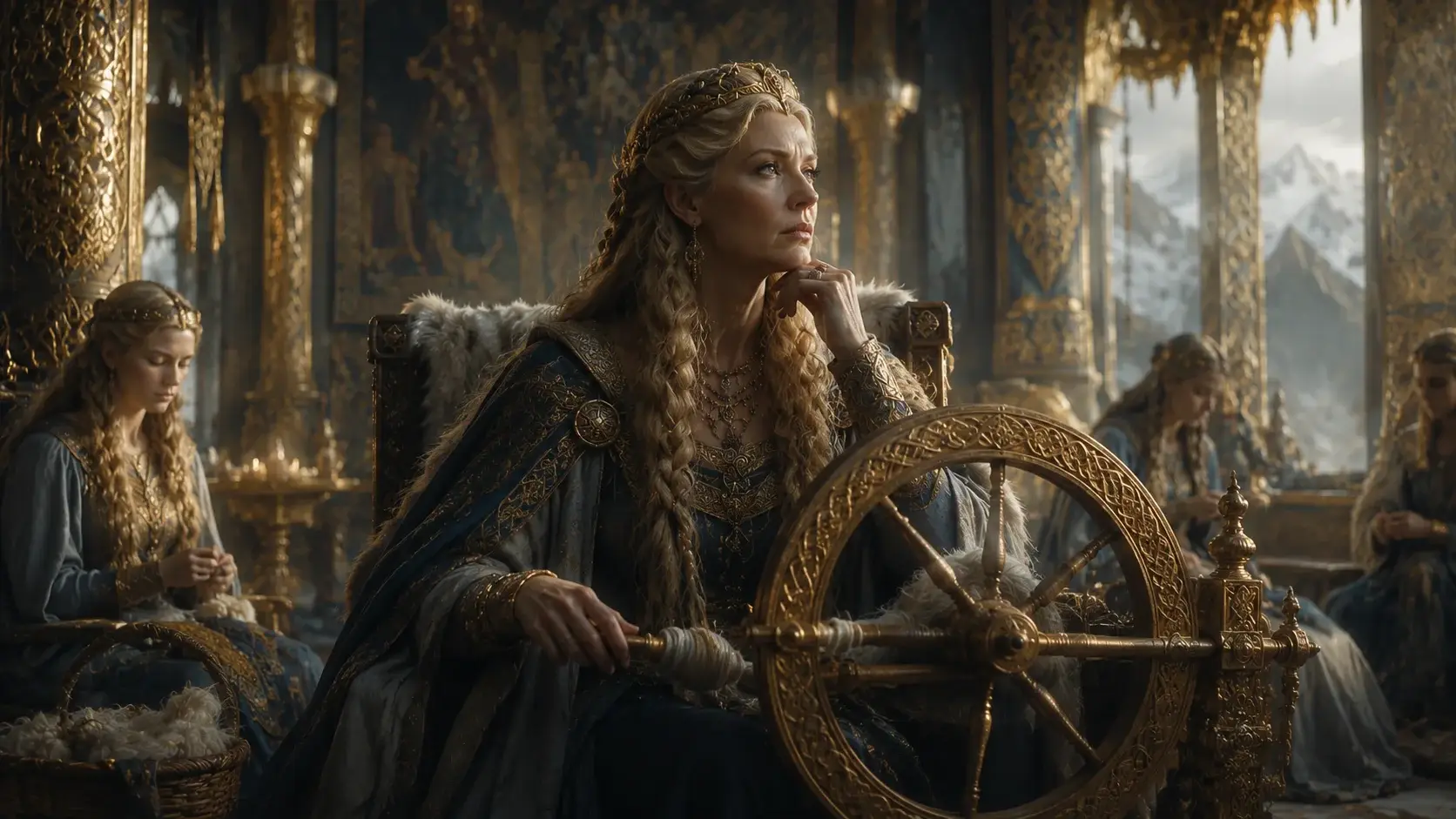
Frigg was the queen of the Norse gods and the highest of the goddesses — the wife of Odin, mistress of the hall Fensalir, goddess of marriage, motherhood, the household and foreknowledge. She alone among the gods shared Odin's gift of seeing all fates, and yet, knowing the future, she could not save her beloved son Baldr from his doom — a tragedy that lies at the heart of her story.
The Queen of Asgard
Frigg (Old Norse Frigg, from a root meaning “beloved”) was the foremost of the Aesir goddesses and the wife of the All-Father, and so the queen of Asgard and the highest lady of heaven. She presided over marriage, the bonds of the household, childbirth and motherhood, and she was attended by handmaidens including Fulla (who kept her casket of treasures), Gna (her messenger) and Hlin (her protector of those she wished to shield). A dignified and powerful figure, she was the one goddess permitted to sit upon Odin's high seat Hlidskjalf and gaze out over all the worlds.
The Goddess Who Knew All Fates
Frigg shared with her husband the deepest and most terrible of gifts: she knew the fate of every being, the whole course of what was to come. Yet, like Odin, she kept her knowledge silent, “though she herself says it not.” This foreknowledge made her wise and serene, but it also bound her to a fate she could see but not change — for she knew, before all others, the doom that was coming for her son.
The Death of Baldr
When her son Baldr, the most beloved and radiant of all the gods, began to dream of his own death, Frigg set out to save him with a mother's desperate love. She traveled through all the world and exacted an oath from every thing — fire and water, iron and stone, beasts and birds, sicknesses and poisons — that none would ever harm her son. So thorough was her work that the gods made a game of hurling weapons at the now-invulnerable Baldr, which all bounced harmlessly away. But Frigg had overlooked one small, seemingly harmless plant: the mistletoe, which she thought too young to swear. The trickster Loki learned of this single gap, fashioned a dart of mistletoe, and guided the hand of the blind god Hodr to throw it — and Baldr fell dead. Frigg's boundless love had been undone by one overlooked exception, and the goddess who knew all fates was made to watch the one she most wished to prevent.
The Grieving Mother of Heaven
Frigg endures as the great mother-goddess and queen of the Norse pantheon — the patroness of wives, mothers and the home, and the tragic figure whose perfect foresight and perfect love together could not save her child. She gives her name, with the goddess Freya, to our weekday Friday. She embodies the deep pathos at the center of Norse myth: that even the wisest love, even the queen of heaven who knows all that is to come, cannot turn aside a fate that is fixed.
She made all the world swear never to harm her son, and forgot only the mistletoe — and so the goddess who saw every fate had to watch the one she dreaded most come true.