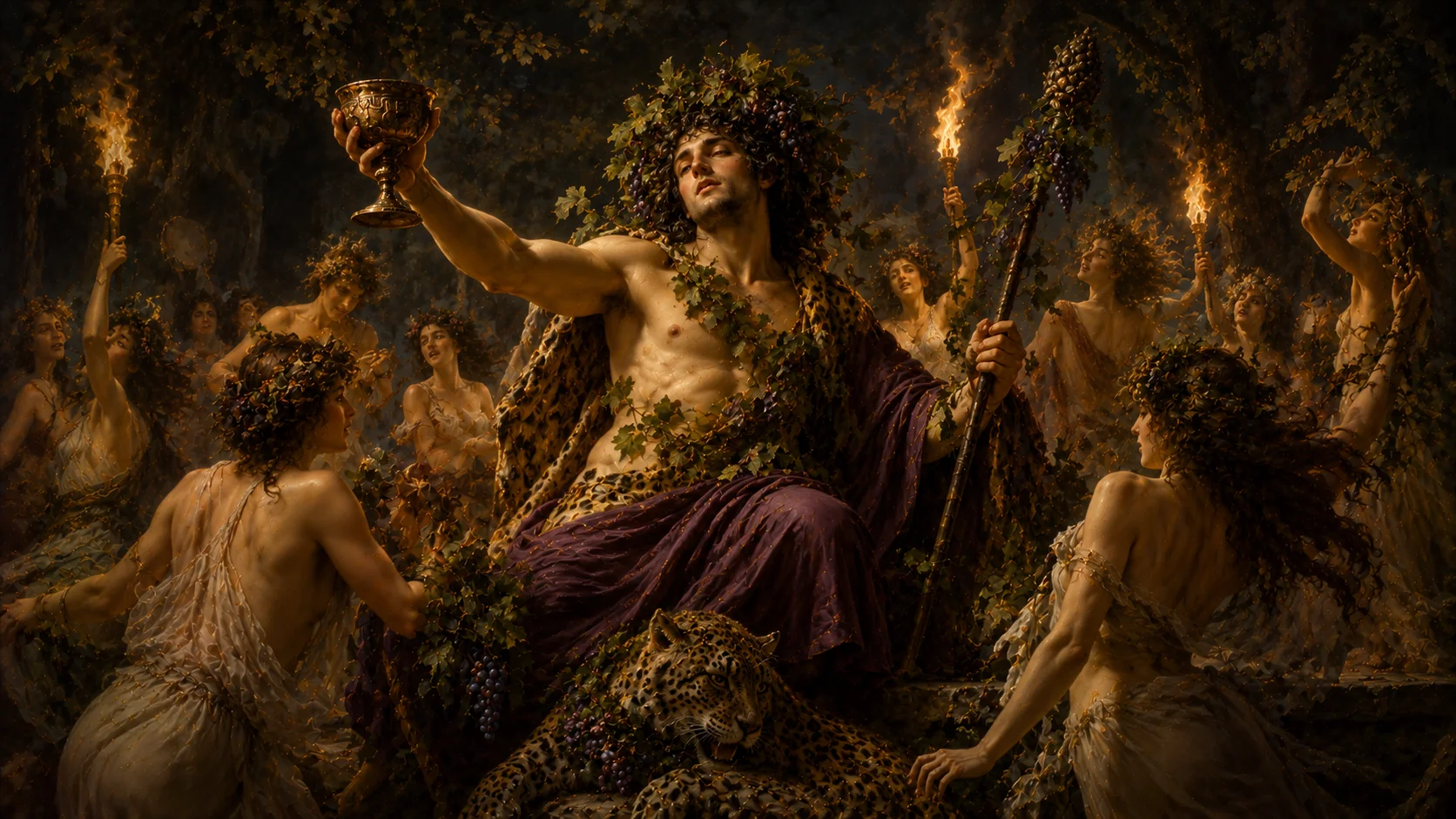
He arrives at the edge of every Greek myth like a stranger from somewhere wilder — crowned in vine leaves, trailed by ecstatic dancers, carrying wine and madness in the same cup. Dionysus, god of wine, ecstasy, the theatre, and divine madness, was the Olympian who dissolved the boundaries the others defended. Where Apollo stood for reason and restraint, Dionysus offered release: the loss of the self in joy — or in horror.
The Twice-Born God
Even his birth broke the rules. His mortal mother Semele, pregnant by Zeus, was tricked by a jealous Hera into asking Zeus to reveal his true divine form — and was instantly burned to ash by the sight. Zeus snatched the unborn child from the flames and sewed him into his own thigh until he was ready to be born. So Dionysus was twice-born, of fire and of a god's body — a deity who had already died once before he drew breath.
The Wine and the Madness
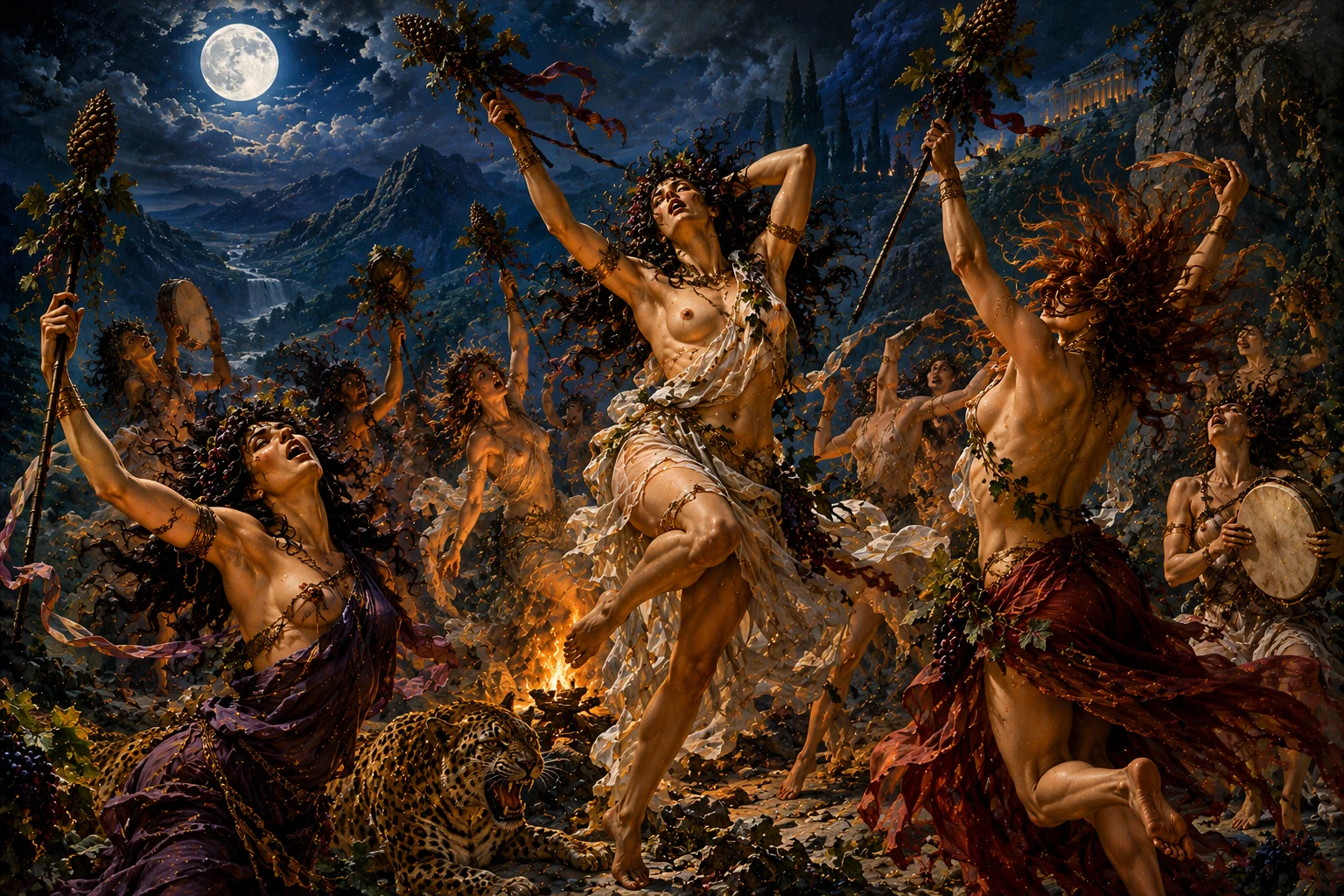
Dionysus gave humanity the vine and the gift of wine — and with it, ecstasy: the dissolving of ordinary self into something larger and freer. His followers, the maenads, danced themselves into a frenzy in the mountains, beyond law and shame. In that state was liberation and joy — but also danger, for the same ecstasy that frees can also tear apart.
The God Who Will Not Be Denied
To refuse Dionysus was fatal. When King Pentheus of Thebes banned his worship and tried to imprison him, the god drove the women of the city into a frenzy — and Pentheus's own mother, in her madness, tore her son apart with her bare hands, believing him a lion. The lesson of the Bacchae is stark: the wild, ecstatic forces Dionysus embodies cannot be denied or caged. Repress them, and they return as catastrophe.
Death and Return
More than any other Olympian, Dionysus was a god of death and rebirth — he descended to the underworld and returned, and his mystery cults promised initiates a blessed afterlife. From his rural festivals grew Greek theatre itself: tragedy and comedy were born as acts of worship to him. The god of wine was also the god of the mask, the stage, and the transformation that lets a person become someone else for a while.
Every glass raised, every actor who steps into another self, every crowd that loses itself in music — all of it still belongs, a little, to the twice-born god.