Of all the Olympians, Demeter is the one whose grief the ancient world could feel in its own belly. She was the goddess of the grain, of the harvest, of the bread that kept a civilisation alive — and when her sorrow came, the whole earth starved with her. Her myth is the story the Greeks told to answer the oldest question of all: why does the world die every winter, and how do we dare to believe it will come back?
The Goddess of the Golden Grain
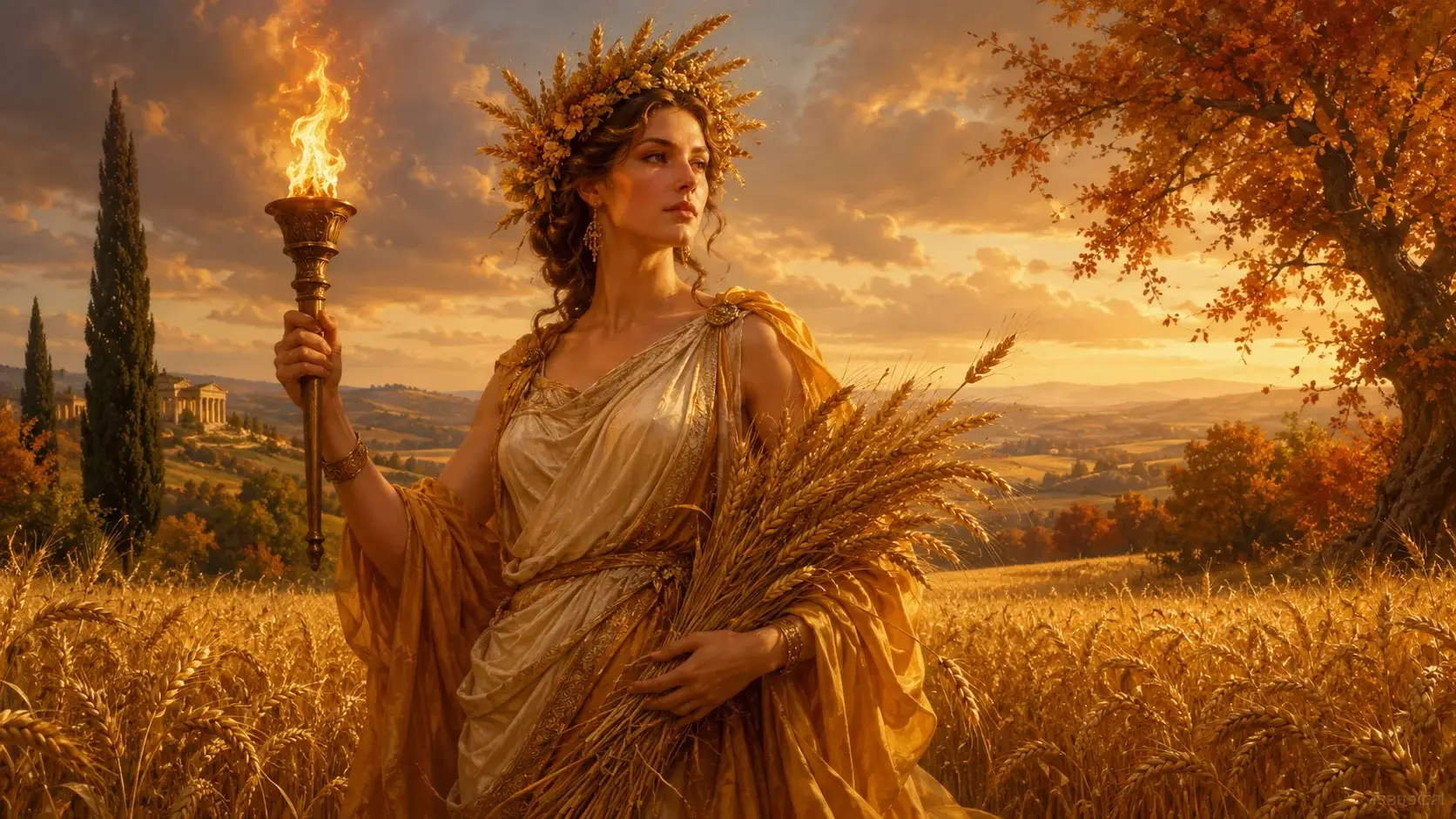
Demeter ruled the cultivated earth: the wheat and barley, the turning seasons, the sacred cycle of sowing and reaping. To an agricultural people she was not an abstraction but survival itself. Her name was spoken at every threshing floor.
The Day the Earth Went Silent
Then Hades, lord of the underworld, carried off her beloved daughter Persephone — with Zeus's quiet consent — to be his queen below. Demeter searched the world for nine days and nights, torch in hand, refusing food and rest. And when she understood her daughter was lost to the dead, her grief turned to wrath: she withdrew her gift from the earth. Crops withered. Fields turned to dust. Humanity began to die, and with no mortals left to make offerings, even the gods would soon be forgotten.
The Bargain of the Pomegranate
Faced with the end of all things, Zeus relented and ordered Persephone returned. But she had eaten a few seeds of a pomegranate in the underworld — and whoever tastes the food of the dead belongs, in part, to the dead. So a bargain was struck: Persephone would spend part of the year with her mother and part below with Hades. When mother and daughter are reunited, Demeter lets the world bloom — spring and summer. When Persephone descends again, Demeter mourns, and the earth falls into autumn and winter. The seasons themselves are the rhythm of a mother's grief and joy.
The Eleusinian Mysteries
From this myth grew the most revered religious rite of the ancient world: the Eleusinian Mysteries. For nearly two thousand years initiates gathered at Eleusis to share in a secret so closely guarded that, astonishingly, it was never written down. What we know is its promise: those who were initiated no longer feared death. In Demeter's grain — buried in the dark earth, only to rise green again — the Greeks found their boldest hope: that the human soul, like the seed, might not truly end in the dark.
Every loaf of bread, the ancients believed, was a small act of faith in Demeter's return.