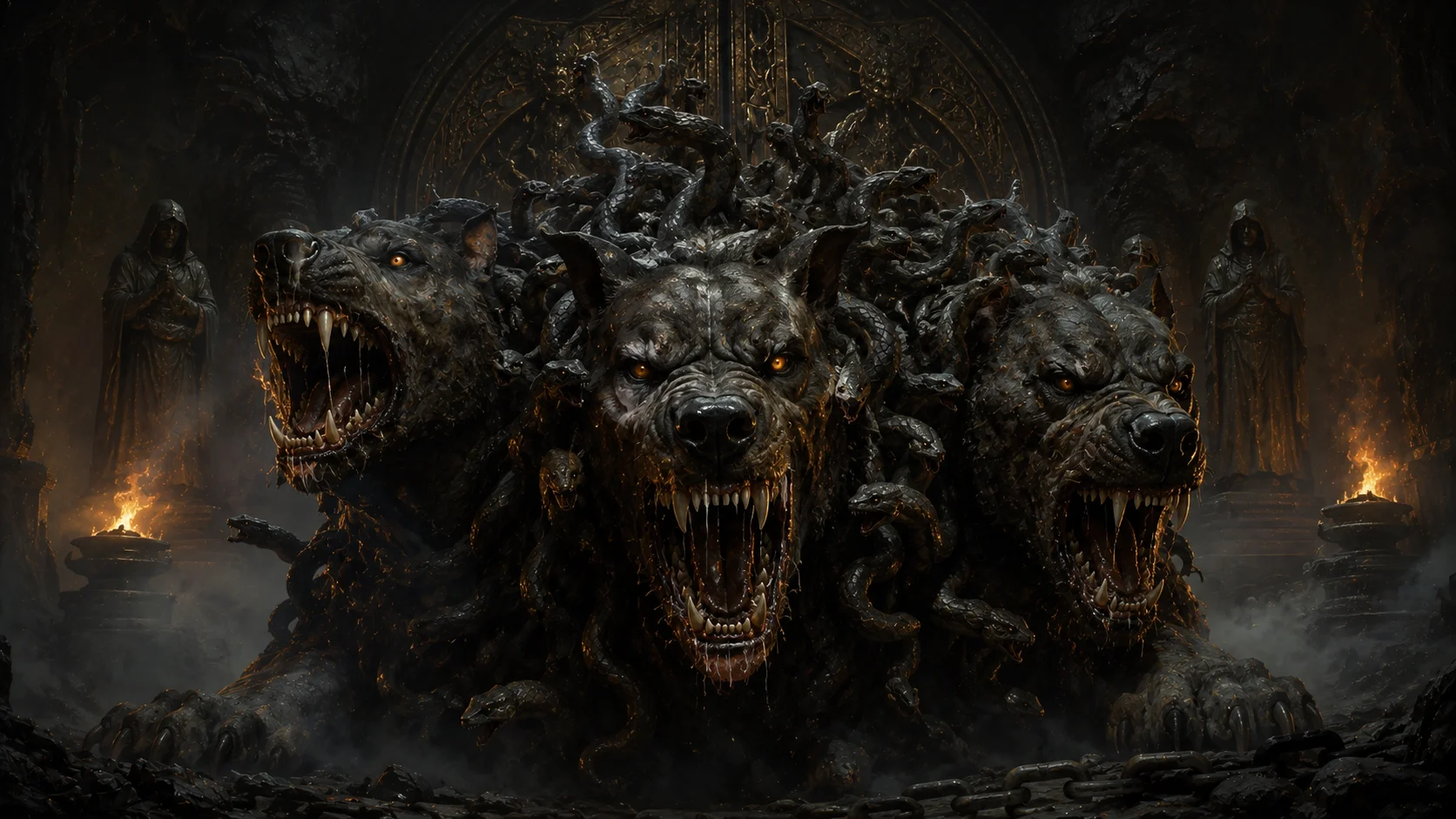
At the gates of the underworld stood a guardian that let any soul enter — and tore apart any that tried to leave: Cerberus, the monstrous three-headed hound of Hades. He is the most famous guard dog in history, the slavering, serpent-maned beast who made the kingdom of the dead a one-way door.
The Hound of Hades
A child of Typhon and Echidna, Cerberus had three heads (some say more), a mane and tail of writhing serpents, and a bite of venom. His task was absolute: he kept the living from entering the realm of the dead, and — more importantly — kept the dead from ever escaping back to the world of the living. He was the lock on the door of death itself.
The Twelfth Labour
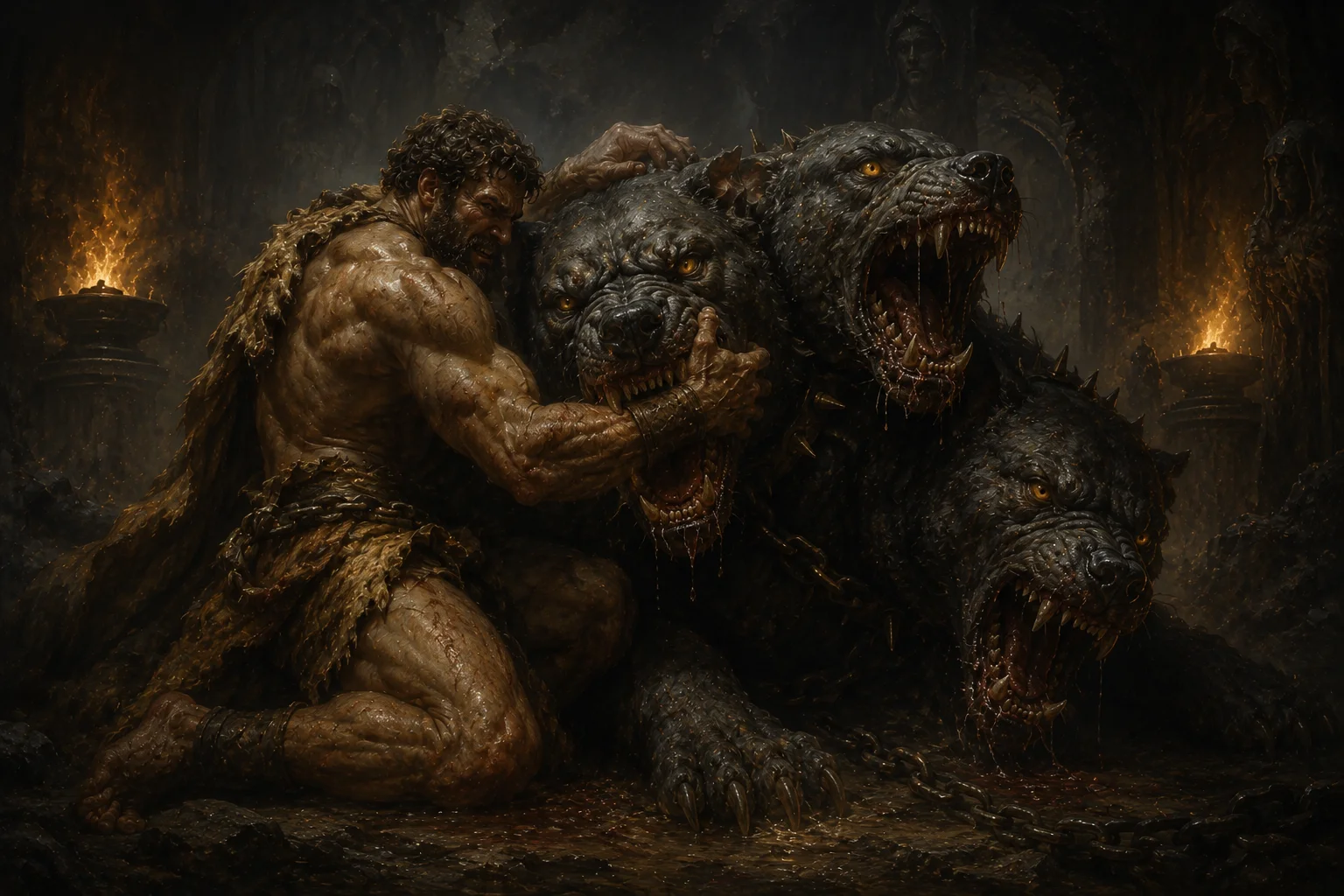
His greatest myth is his defeat — or rather, his temporary capture. For the last and hardest of his Twelve Labours, Heracles was sent to drag Cerberus up from the underworld alive. With Hades' grudging permission — granted on the condition that he use no weapons — Heracles wrestled the great hound into submission with his bare hands and hauled him up to the surface, before returning him to his post. It was the labour that conquered death's own guardian.
Music and Honey-Cakes
A few others slipped past him. Orpheus lulled the beast to sleep with the music of his lyre. The Sibyl who guided Aeneas tossed him a honey-cake drugged to make him drowse. The Greeks loved these details: even the unconquerable guardian of the dead had his weaknesses — a beautiful song, a sweet treat, a hero strong enough to choke him quiet.
To “throw a sop to Cerberus” still means to placate a fearsome guardian — for everyone, even death, can sometimes be slipped past.