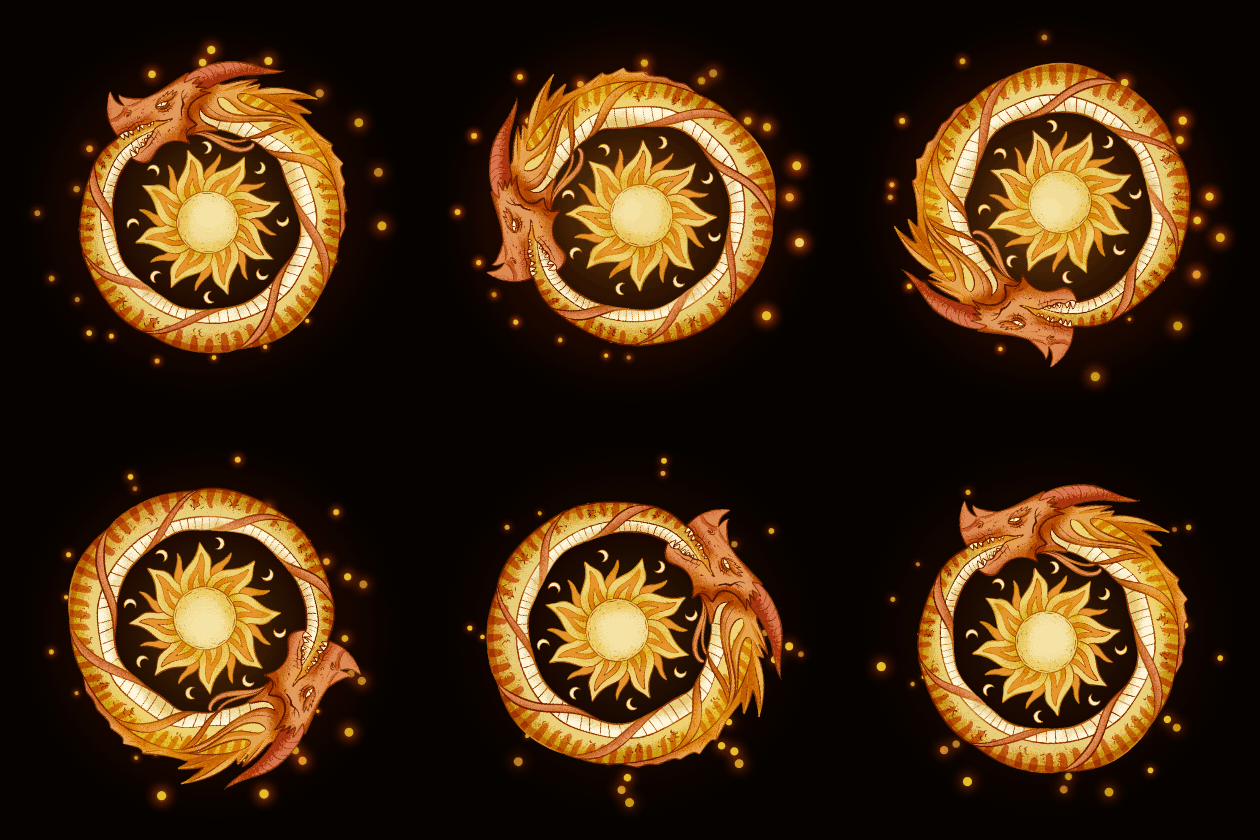
The Basilisk is the dread “king of serpents” of classical and medieval European legend: a small but supremely deadly reptile whose very gaze and breath bring death, able to slay with a look, to wither plants and crack stone, and so venomous that it poisons the very air around it — born, in the medieval telling, from an egg laid by a cock and hatched by a serpent or toad. It is the king of serpents, the death-dealing glance of the bestiary.
The King of Serpents
The Basilisk (from the Greek basiliskos, “little king”) was described by Pliny the Elder and the classical authors as a small serpent of Cyrenaica, no more than a span (a hand’s breadth) long, but the most deadly of all creatures — called the king of serpents because of a crown-like crest or white marking on its head, and because all other serpents fled before it. Despite its small size, its power was terrible beyond all others: it killed not by bite alone but by its very presence.
The Deadly Glance and Breath
The Basilisk’s power was death itself. Its gaze could kill: to meet the eye of a basilisk was to die on the spot. Its breath and venom were so potent that they withered the grass, blasted the shrubs, split the rocks, and poisoned the streams and the very air around it, so that no living thing could survive in its vicinity; birds flying overhead fell dead from the sky. So lethal was it that, in one famous classical tale, a horseman who speared a basilisk died — and so did his horse — as the venom ran up the spear. It was held to be vulnerable to only a few things: the crowing of a cock (whose sound was death to it), the smell of the weasel (its mortal enemy, the only creature that could kill it), and its own reflection in a mirror, which would slay it with its own deadly gaze.
The Cockatrice and the Bestiary
In the Middle Ages the Basilisk grew and changed: it became larger and more dragon-like, often confused or merged with the [cockatrice] (the two became nearly identical), and acquired the famous origin-legend — that it was hatched from an egg laid by a rooster (a cock’s egg, round and yolkless) and incubated by a serpent or a toad, an unnatural birth that produced an unnatural monster. It became a stock figure of the bestiaries, the emblem books, and heraldry, a symbol of deadly evil, of the Devil, and of sins that kill the soul. From its blend with the cockatrice and its dread reputation it has endured into modern fantasy. In the Basilisk, the European imagination gave form to the king of serpents — the small, crowned reptile whose gaze and breath bring instant death and poison the very air, slain only by the cock’s crow, the weasel, and its own reflection, the death-dealing monarch of the bestiary.