Baldr was the god of light, beauty, joy and purity — the most beloved and radiant of all the Norse gods, the shining son of Odin and Frigg whose death was the first great sorrow of the Aesir and the first sign that the doom of the gods had begun. His murder, engineered by Loki, is the most poignant and important tragedy in all of Norse myth: the moment the light went out of the world, and Ragnarök drew near.
The Shining God
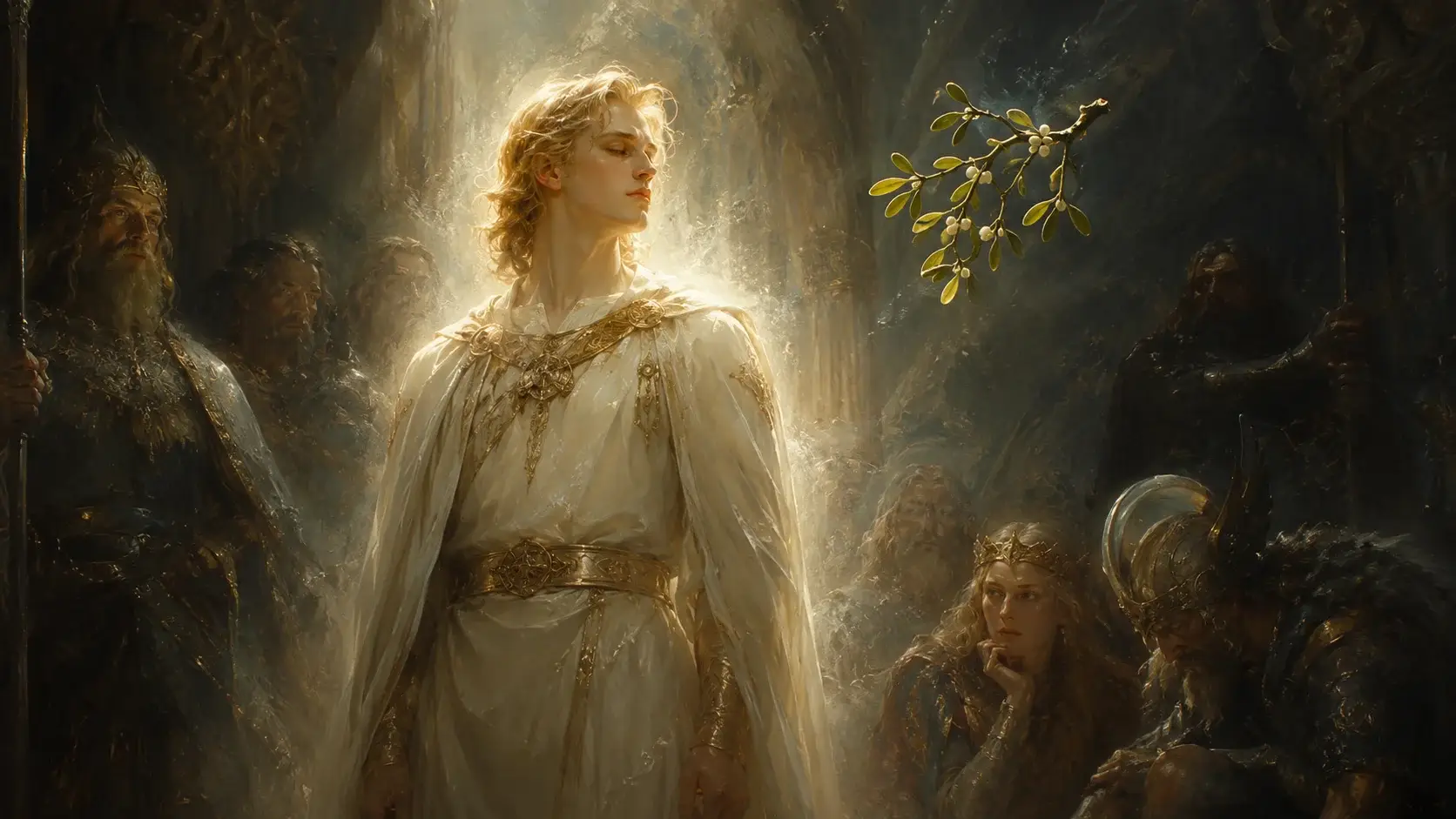
Baldr (Old Norse Baldr) was a son of the All-Father Odin and the queen Frigg, and the husband of the gentle goddess Nanna. He was described as so fair and bright that light shone from him, the most beautiful of the gods, the wisest, the gentlest and the most merciful, beloved by all the Aesir and by all living things. He dwelt in the hall Breidablik, “the broad-gleaming,” into which nothing impure could come. He was, in short, the best of the gods — goodness and beauty made divine — which made his loss all the more terrible.
The Dreams of Death
Baldr's doom announced itself in ominous dreams that foretold his death. Alarmed, his mother Frigg traveled through all the world and made every thing — fire, water, metal, stone, trees, beasts, sicknesses, poisons — swear an oath never to harm him. Believing him now invulnerable, the gods made a joyful game of throwing weapons and stones at Baldr, delighting as everything bounced harmlessly away from the shining god. But Frigg had passed over one plant as too young and harmless to bother with: the mistletoe.
The Murder by Mistletoe
The trickster Loki, consumed by malice, learned of this single overlooked plant. He fashioned a dart (or arrow) of mistletoe and brought it to the blind god Hodr, Baldr's own brother, who stood apart from the game because he could not see to take part. Loki offered to guide his hand — and Hodr, unknowing, hurled the mistletoe dart, which pierced Baldr through and killed him instantly. The bright god fell dead, and a grief beyond words fell upon the Aesir, for the best and most beloved of them all was gone, slain by a brother's hand and a trickster's spite.
The Failed Rescue from Hel
Baldr went down to Hel, the realm of the dead. The gods sent the messenger Hermod riding down the long dark road to beg for his return, and Hel agreed to release him on one condition: that every single thing in all the world, living and dead, weep for Baldr. And so it nearly was — all things wept, gods and men, beasts and stones and trees, all the world in tears for the shining god. All but one: a giantess named Thokk (in truth Loki in disguise) sat in a cave and refused to weep, saying “let Hel keep what she has.” And so, because of one dry-eyed refusal, Baldr was doomed to remain among the dead until the world should end.
The Light That Returns After the End
Baldr's death was the turning point of Norse myth — the first death among the gods, the beginning of the end, the sign that even the divine order was now mortal and doomed. Yet his story holds the one great promise of hope in the Norse vision: for it was foretold that after Ragnarök, when the old world has burned and drowned and the old gods have fallen, Baldr will return from the dead, rising into the new and cleansed world to rule in peace. He endures as the god of light and resurrection, the beauty that is lost and the hope that it will, one day, come again.
The brightest of the gods was killed by the one plant his mother forgot, kept in the realm of death by one refusal to weep — yet of all the gods, he alone is promised a return after the end of the world.